

Customer Feedback Collection: Turn Insights into Action
Master customer feedback collection with SayWall's expert guide. Improve products, boost satisfaction, and drive growth. Learn effective strategies today!
Ignoring customer feedback is a direct path to stagnation. Many businesses invest heavily in acquisition, yet overlook the goldmine of insights their existing customers offer. Effective customer feedback collection isn't just about gathering opinions; it's about understanding pain points, validating product decisions, and identifying growth opportunities that directly impact your bottom line.
This isn't a passive activity.
It requires strategic planning and the right approach. You need to know which methods truly work, and when to deploy them for maximum impact.
In this comprehensive guide, we'll explore the core methods for collecting customer feedback, from targeted surveys to in-depth interviews, alongside essential tools and best practices. We'll show you how to transform raw input into actionable intelligence, ensuring your business not only listens but also evolves. Get ready to unlock the true power of your customer base.
Summary
Effective customer feedback collection involves systematically gathering insights through various methods to enhance product development, service delivery, and overall customer satisfaction. This process is crucial for understanding customer needs and driving business growth.- Leveraging diverse methods like direct interviews, automated forms, and structured focus groups provides a comprehensive view of customer sentiment.
- Platforms such as SayWall streamline feedback collection with public forms and email requests, aggregating testimonials for easy display across your website.
- Video testimonials significantly boost credibility and conversion rates, offering authentic social proof that text-based reviews often cannot fully capture.
- Analyzing collected feedback through robust analytics helps identify key trends and actionable insights for continuous product and service improvement.
What Is Customer Feedback Collection and Why It Matters
Customer feedback collection is the systematic process of gathering, organizing, and analyzing customer opinions, experiences, and suggestions. Far more than a mere customer service task, it's a strategic business function vital for continuous improvement and growth. This process encompasses two primary approaches: active collection, where businesses deliberately solicit input, and passive collection, which involves monitoring what customers say organically across various channels.
The strategic value of effective customer feedback collection is immense. It provides actionable insights crucial for reducing customer churn, refining product-market fit, validating critical roadmap decisions, and ultimately boosting customer lifetime value (CLV). By leveraging these insights, companies can significantly improve customer loyalty metrics and drive sustainable success. Understanding these foundational aspects sets the stage for exploring the diverse Methods and Best practices for gathering this invaluable data.
Core Methods for Collecting Customer Feedback
Building on the understanding of why customer feedback collection is critical, the next step involves selecting the most effective methods. Different approaches yield different types of insights, from broad quantitative trends to granular qualitative details. A strategic approach involves matching the right method to your specific feedback goals, ensuring you gather actionable data to drive product and service improvements.
Effective customer feedback collection leverages a variety of tools, each designed to capture distinct facets of the customer experience. For instance, surveys are invaluable for collecting structured, quantitative data from a large audience, providing measurable insights into satisfaction or sentiment. In contrast, interviews and focus groups offer deep qualitative insights, allowing businesses to explore the "why" behind customer behaviors and preferences through direct conversation.
Beyond direct solicitation, observational and passive methods also play a crucial role. Usability tests provide direct observation of how customers interact with a product or service, pinpointing areas of friction or confusion. Dedicated feedback forms, often embedded within websites or applications, offer a direct channel for customers to submit specific suggestions or report issues in context. Furthermore, monitoring public discourse through social media listening provides real-time sentiment analysis and uncovers unsolicited opinions about your brand and industry. Analyzing customer support tickets reveals common pain points and recurring issues, highlighting areas for immediate improvement. Finally, aggregating data from review platforms offers a public pulse on product perception and can even provide valuable video testimonials for social proof.
Choosing the optimal method depends entirely on what you aim to learn. Here’s a framework to guide your selection:
| Method | Data Type | Primary Use Case |
|---|---|---|
| Surveys | Quantitative | Measuring satisfaction, sentiment, or specific metrics across a large user base. |
| Interviews & Focus Groups | Qualitative | Understanding motivations, exploring new ideas, or gaining in-depth context. |
| Usability Tests | Qualitative (Observational) | Identifying friction points and improving user experience with a product or feature. |
| Feedback Forms | Mixed (Qualitative focus) | Collecting specific suggestions, bug reports, or feature requests in context. |
| Social Media Listening | Mixed (Qualitative focus) | Monitoring brand perception, identifying trends, and capturing unsolicited feedback. |
| Customer Support Tickets | Qualitative | Identifying recurring issues, common pain points, and areas for service improvement. |
| Review Platforms | Mixed (Qualitative focus) | Gauging public sentiment, product perception, and competitive analysis. |
By strategically deploying these methods, businesses can build a comprehensive understanding of their customers' needs and experiences, paving the way for targeted enhancements. The next section will delve deeper into the specifics of surveys, a cornerstone of scalable quantitative feedback.
Surveys: Scalable Quantitative Feedback
For scalable customer feedback collection, surveys are essential for gathering Quantitative data efficiently. Standardized feedback tools like the NPS (Net Promoter Score) measure customer loyalty, CSAT (Customer Satisfaction Score) gauges satisfaction with specific interactions, and CES (Customer Effort Score) assesses ease of experience. Effective surveys are concise, ideally 5-7 questions, blending rating scales with open-ended questions to capture both broad sentiment and specific insights. Deploy these strategically after key customer touchpoints, such as post-purchase or support interactions, to maximize relevance and avoid survey fatigue, ensuring valuable customer loyalty metrics.
Interviews and Focus Groups: Deep Qualitative Insights
While surveys provide scalable quantitative data, interviews and focus groups unlock deep qualitative insights for effective customer feedback collection. Interviews are invaluable for understanding complex products, navigating B2B relationships, or making major feature decisions, allowing exploration of individual pain points and motivations. Focus groups, on the other hand, excel in concept testing or broader market research, revealing common trends and group dynamics. When conducting interviews, choose between structured approaches with a fixed script or semi-structured methods that allow flexibility to explore emerging themes. Strategic recruitment is essential to ensure your sample accurately represents target users, informing your product roadmap with actionable analytics.
Passive Collection: Social Listening and Support Tickets
While direct methods offer targeted insights, passive customer feedback collection provides invaluable, unsolicited perspectives, forming a multi-channel feedback ecosystem. Social media listening tools continuously monitor brand mentions, revealing real-time sentiment, emerging Pain points, and feature requests. This data stream complements active collection. Analyzing customer support tickets identifies recurring product issues and Common trends in user friction. Robust analytics from these tickets directly inform your product Roadmap. Additionally, monitoring external review platforms (G2, Trustpilot, app stores) offers competitive intelligence and highlights areas for continuous improvement. Systematizing this passive monitoring ensures a holistic customer experience understanding.
Direct Feedback Mechanisms: Forms and Suggestion Boxes
Beyond passive monitoring, direct channels offer immediate avenues for customer feedback collection. These include in-app feedback widgets, website contact forms, and dedicated digital suggestion boxes. These mechanisms empower customers to proactively share their thoughts, report Pain points, or propose new ideas directly to your team.
Effective design is paramount for these direct feedback boxes. Strategic placement, often context-specific, reduces friction and encourages submissions. For instance, an in-app widget appearing after a specific user action or a website contact form easily accessible on key pages, ensures relevance. UX principles dictate clear, concise prompts that guide users, making the process simple and intuitive. This customer-centricity maximizes response rates.
Once collected, efficiently handling and routing this direct feedback is crucial for Continuous improvement. Establishing clear processes for categorizing submissions, identifying Common trends, and assigning them to relevant teams ensures that valuable insights from these suggestion forms translate into actionable steps.
When to Collect Customer Feedback: Strategic Timing
While understanding the various direct feedback mechanisms is crucial, knowing when to collect customer feedback is equally vital for actionable insights. Strategic timing ensures you capture sentiment at the most impactful moments, aligning feedback requests with the customer journey rather than arbitrary schedules. This customer-centricity approach maximizes relevance and response quality for effective customer feedback collection.
Effective feedback collection maps directly to key stages of the customer journey. This includes moments like initial onboarding, successful activation, regular product usage, renewal or expansion opportunities, and even when there's a risk of churn. Each stage offers unique opportunities to understand user experience and identify areas for continuous improvement.
Beyond journey stages, event-triggered feedback provides immediate context. This could be after a support interaction, following a significant feature release, or upon a customer achieving a key milestone. Post-purchase feedback, for instance, offers insights into initial satisfaction. For broader understanding, establishing a relationship feedback cadence, such as quarterly health checks or annual satisfaction surveys, helps track overall customer loyalty metrics.
A critical best practice is to balance feedback requests to avoid survey fatigue. Overwhelming customers with too many prompts can diminish response rates and quality. By strategically timing requests and integrating them seamlessly into the user experience, businesses can maintain a robust feedback loop without sacrificing engagement. This thoughtful approach ensures a steady flow of valuable insights, paving the way for targeted improvements, especially during critical early stages like post-purchase and onboarding.
Post-Purchase and Onboarding Feedback
Strategic timing for customer feedback collection is crucial post-purchase and during onboarding. Request feedback 3-7 days after delivery or activation; this allows customers to form an opinion before memory fades. For onboarding, solicit feedback after users complete key setup steps or achieve their first "value moment." This ties requests to tangible progress, not arbitrary delays, ensuring fresh insights.
Focus questions on ease of use, expectation matching, and any initial blockers. This provides actionable data for Continuous improvement and reinforces Customer-centricity, reflecting industry best practices.
Support Interaction and Issue Resolution Feedback
Vital customer feedback collection also occurs after support interactions. Immediately following a customer support tickets or Live chat exchange, deploy a brief survey (within 24 hours) to assess service quality. These often gauge agent helpfulness and efficiency, typically using a CSAT score.
A separate, concise follow-up after issue resolution confirms satisfaction. Just 1-3 questions per request maximizes response rates. This two-stage approach drives Continuous improvement and reinforces Customer-centricity.
Essential Tools and Platforms for Feedback Collection
Effective customer feedback collection moves beyond simple forms; it demands a robust ecosystem of tools designed for specific needs. While immediate post-interaction surveys are crucial, a comprehensive strategy integrates various platforms to capture diverse insights. Businesses leverage a range of solutions, from dedicated survey tools for scalable quantitative data to sophisticated customer success platforms that offer a holistic view of the customer journey.
For continuous feedback aggregation, advanced review management platforms offer auto-sync capabilities for imports, with configurable intervals ranging from 6-hour to weekly updates, as seen with SayWall.
When selecting tools for your customer feedback collection strategy, consider key criteria. Integration capabilities are paramount, ensuring seamless data flow between your CRM, marketing automation, and analytics platforms. Automation features are also vital for efficiency, allowing you to trigger surveys or feedback requests at specific points in the customer journey without manual intervention. Robust analysis tools are essential for transforming raw data into actionable insights, helping you identify trends and prioritize improvements. Finally, evaluate pricing models to ensure the chosen solution aligns with your budget and scales with your business needs.
The decision between building a custom feedback solution or buying an off-the-shelf tool often hinges on unique business requirements and available resources. While custom solutions offer unparalleled flexibility, pre-built platforms, including specialized review platforms like SayWall for testimonial collection, often provide best practices, faster deployment, and ongoing support. Ultimately, the right tools empower a truly Customer-centric approach, ensuring every piece of feedback contributes to continuous improvement.
Testimonial and Review Management Platforms
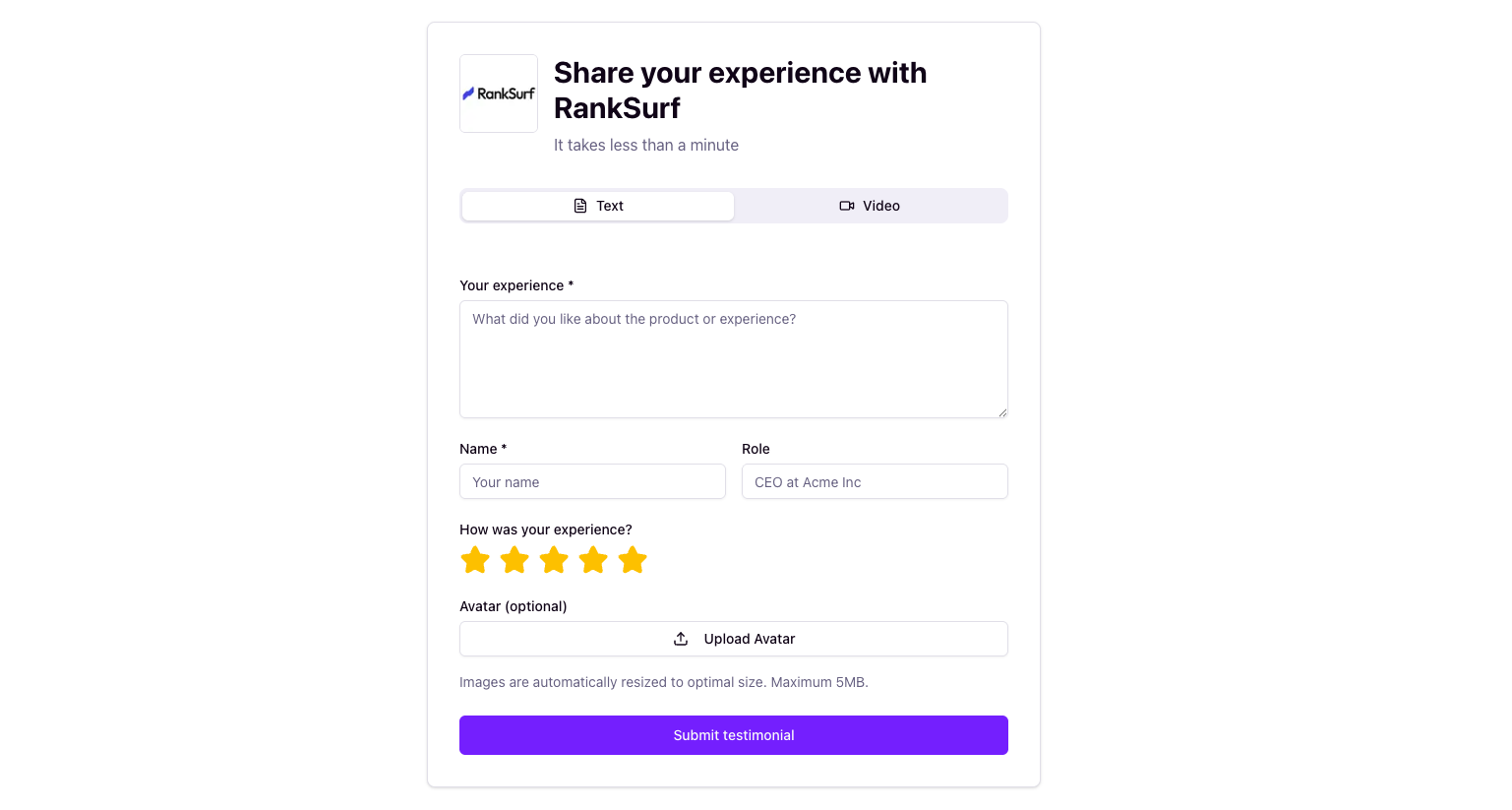
Testimonial and review platforms are vital for businesses seeking social proof via customer feedback collection. They provide collection forms, video recording, and review imports for display via widgets, boosting marketing and sales.
Some advanced feedback platforms, such as SayWall, offer a public review directory where users can browse testimonials for over 150 SaaS products, enhancing transparency and discoverability.
Effective review platforms incorporate robust SEO features, such as JSON-LD schema for Product and Review, dynamic OG images with rating visualizations, and comprehensive meta tags, to ensure testimonials are discoverable by search engines. SayWall offers comprehensive testimonial management with these capabilities and methods; alternatives exist.
Survey and Forms Software
Survey and forms software provides robust tools for structured customer feedback collection. These platforms offer advanced question logic, diverse question types, distribution automation, and basic analytics for immediate insight into survey responses.
Ideal for quantitative research and large-scale feedback collection, these methods establish standardized metrics for a Customer-centric approach. Crucially, effective survey software integrates seamlessly with CRM and marketing automation platforms. This connectivity enables automated follow-ups and personalized feedback loops, highlighting enterprise automation capabilities.
Analytics and Customer Intelligence Platforms
Beyond basic survey reporting, Analytics and Customer Intelligence Platforms elevate customer feedback collection by offering advanced capabilities. These tools provide sentiment analysis and text analytics, transforming raw data from surveys, online reviews, and live chat into actionable insights. They identify trends and present findings through comprehensive reporting dashboards. Crucially, these platforms synthesize feedback from multiple sources, fostering true Customer-centricity. Modern platforms often integrate AI-powered categorization and predictive analytics, streamlining the understanding of vast amounts of customer feedback.
Best Practices for Effective Feedback Collection
While advanced analytics platforms are crucial for synthesizing insights, the effectiveness of your building customer trust and customer feedback collection efforts ultimately hinges on sound foundational practices. Implementing these best practices ensures you gather high-quality, actionable data, not just volume.
First, prioritize question design. Instead of vague satisfaction queries, ask specific questions that generate actionable insights. Focus on behaviors, specific interactions, or pain points. This approach yields data you can directly use to improve products or services.
Next, significantly reduce friction for respondents. Minimize required fields in forms, offer multiple response formats (e.g., text, ratings, multiple-choice), and always optimize your collection tools for mobile devices. An effortless experience maximizes participation and response quality.
Incentivize thoughtfully, if at all. While rewards can boost response rates, they can also introduce bias. If offering incentives, ensure they are modest and clearly communicated to avoid influencing genuine responses. The goal is authentic feedback, not just participation.
Transparency is paramount. Clearly explain to customers what you intend to do with their feedback and, critically, follow through on that promise. This builds trust and encourages continued engagement in the feedback loop, enhancing customer loyalty metrics.
Adopt a multi-channel approach. Never rely on a single method for customer feedback collection. Triangulate insights across various sources like surveys, interviews, Online reviews, and even Live chat interactions. This provides a holistic view and validates findings from different Methods.
Finally, segment requests. Tailor your questions and the timing of your feedback requests to specific customer segments and their unique journey stages. A new user's onboarding experience requires different questions than a long-term, high-value customer's satisfaction check.
Asking Questions That Generate Actionable Insights
To gather actionable insights from customer feedback collection, avoid generic questions. Instead of "How satisfied are you?", ask: "What SayWall feature was most valuable for testimonial collection?"
Use situation-specific prompts: "What nearly prevented you from completing your recent subscription checkout?" Combine quantitative ratings with 'why' questions, e.g., "On a scale of 1-5, how easy was setup? Explain."
Effective survey design includes retrospective ("What was your biggest challenge using [Feature X]?") and prospective questions ("What new feature would enhance customer feedback collection?"). These best practices drive tangible improvements.
Maximizing Response Rates Without Sacrificing Quality
Beyond crafting actionable questions, optimizing when you ask for customer feedback collection significantly boosts engagement. Requesting input at peak engagement points—like immediately after a successful onboarding or a resolved support interaction—yields higher quality responses. Employ varied methods: short, one-click micro-surveys are ideal for broad audiences, while more engaged customers might complete longer, detailed questionnaires. Demonstrate the value exchange by showing how past feedback led to tangible improvements, perhaps via a public Voting board. Finally, make the process effortless. Implement best practices like one-click rating options and mobile-optimized designs to minimize friction, ensuring every piece of customer feedback is easy to provide.
How to Analyze and Prioritize Customer Feedback
Collecting customer feedback is only the first step; its true value emerges through systematic analysis and prioritization. This process transforms raw data from various SayWall sources, including surveys and Online reviews, into a clear roadmap for product and service enhancement. Effective analyzing feedback requires a structured approach to identify patterns and determine the most impactful actions.
Begin by establishing robust organization systems for all incoming feedback. This involves initial categorization and theme identification across diverse feedback sources, ensuring consistency. Once organized, quantitative analysis becomes crucial. This includes frequency analysis, which reveals how often specific issues or requests appear, sentiment scoring to gauge overall customer emotion (positive, negative, neutral), and trend identification over time to spot emerging patterns or recurring problems. These analytics provide a data-driven overview.
Alongside quantitative data, qualitative synthesis is essential. This involves delving into open-ended responses from interviews or Live chat transcripts to identify specific customer language, underlying pain points, and nuanced suggestions. By understanding the "why" behind the numbers, businesses gain deeper, more actionable insights.
Next, apply clear prioritization frameworks to determine which feedback warrants immediate attention. Common methods include an impact vs. effort matrix, frequency vs. severity assessments, and alignment with strategic business goals. This structured approach ensures resources are directed where they will yield the greatest return. Finally, foster a cross-functional review process, involving product, support, and marketing teams. This collaborative approach to prioritizing feedback ensures diverse perspectives are considered, leading to more comprehensive and effective solutions from your customer feedback collection efforts.
Categorizing and Tagging Feedback Systematically
For effective customer feedback collection, developing a standard taxonomy is a core best practice. Categorize feedback by product areas (e.g., 'Onboarding', 'Integrations'), issue types (feature requests, bugs, UX issues), and service quality. Use consistent tags across all sources, from Online reviews to Live chat, ensuring seamless aggregation when analyzing feedback. Implement sentiment labels (positive, negative, neutral, urgent) and track customer segment and journey stage for deeper contextual understanding. These methods transform raw data into actionable insights.
Prioritization Frameworks: Impact vs. Effort
After systematically categorizing your customer feedback collection, effective prioritizing feedback is crucial for generating actionable insights. Impact assessment considers the number of customers affected, potential revenue at risk, and strategic importance to SayWall's goals. Effort estimation involves evaluating development time, required resource allocation, and technical complexity. Plotting these on a 2x2 matrix identifies quick wins (high impact, low effort) versus strategic bets (high impact, high effort). Additionally, factor in feedback recency and trend direction, such as increasing mentions from Online reviews or Live chat, to refine your prioritization frameworks and ensure best practices.
Closing the Feedback Loop: Taking Action and Communicating Results
After effectively prioritizing customer feedback collection using frameworks like impact versus effort, the critical next step is to translate those actionable insights into tangible product or service improvements. This isn't just about analysis; it's about completing the feedback loop by taking decisive action. Implement concrete changes by integrating prioritized feedback directly into your development and operational cycles, ensuring customer voices drive evolution.
A vital component is a clear communication strategy. Announce the implemented changes to the customers who provided the initial input, demonstrating the direct cause-and-effect of their contributions. Following implementation, it's essential to validate that these changes have indeed solved the reported problems, ensuring the effectiveness of your efforts and confirming customer satisfaction.
To truly embed customer success best practices, integrate feedback into your organizational culture through regular review cycles and feedback-driven metrics. Understandably, not all feedback can be acted upon. In such instances, transparently explain the constraints, offer alternative solutions where feasible, and maintain a respectful relationship. This approach, rooted in effective change management, builds trust even when direct action isn't possible.
Communicating Changes Back to Customers
Once customer feedback drives action, transparent communication is key. Begin with direct outreach to individuals who provided specific suggestions, informing them how their input led to tangible improvements. This personal touch strengthens relationships and validates their input in the customer feedback collection process.
For wider audiences, public changelogs or release notes explicitly connect new features to customer requests. Short case studies can illustrate the full feedback-to-implementation journey. In-app notifications are powerful for highlighting 'You asked, we built' moments, reinforcing the feedback loop and boosting customer loyalty metrics. These methods provide multiple channels to attribute changes directly to customer input.
Industry Examples: How Leading Companies Collect Feedback
Leading companies demonstrate effective customer feedback collection through multi-method approaches, ensuring a comprehensive feedback loop for continuous improvement.
Amazon, for example, builds a vast feedback ecosystem. Beyond its well-known product reviews and Q&A, it actively solicits post-purchase emails and leverages seller feedback, creating a robust, multi-channel view of the customer experience.
SaaS companies often use in-app NPS surveys, feature voting boards, and beta testing programs. Customer advisory councils provide deep qualitative insights, aligning product roadmaps with user needs.
E-commerce businesses employ post-delivery surveys, track return reasons, and utilize Live chat for immediate feedback. Incentivizing product reviews on various review platforms also builds social proof.
In B2B services, feedback is embedded in relationship management through quarterly business reviews, executive sponsor calls, and account health scoring. These methods ensure ongoing client satisfaction and strategic alignment.
Amazon's Multi-Channel Feedback Ecosystem
Amazon exemplifies a robust approach to customer feedback collection, transforming insights into a powerful discovery engine. Their system leverages product reviews, prominently featuring verified purchase badges to build trust and credibility for potential buyers. Complementing this, the Customer Q&A feature allows prospective customers to directly engage with previous buyers, gaining real-world perspectives. Post-purchase satisfaction emails specifically target delivery and product experience, while distinct seller feedback mechanisms ensure marketplace quality. Crucially, Amazon integrates all these diverse feedback types—from online reviews to surveys—into its search ranking and recommendation algorithms. This strategic integration not only refines product offerings but also actively guides new customers towards relevant items, making feedback a core component of the shopping experience and a vital best practice for any business.
Your Next Steps to Actionable Insights
Ready to transform how you understand your customers? The journey to effective customer feedback collection begins with a single, deliberate step. Don't get overwhelmed by the breadth of methods or tools; focus on immediate, impactful action.
Your first step is to identify a specific customer pain point or decision point you want to understand better. Is it onboarding friction? Churn reasons? Feature requests? Pinpointing this focus will guide your initial efforts and make the process manageable.
Next, select one simple method and a user-friendly tool. For instance, a quick in-app survey or a post-purchase email can yield valuable insights without significant overhead. Consider a platform like SayWall to streamline this process, offering an intuitive way to gather and organize responses efficiently.
Finally, commit to analyzing the feedback you receive. Look for common trends, not just individual complaints. This data forms your strategic roadmap, informing product improvements and service enhancements. Implementing even a basic customer feedback collection system today will provide a competitive edge tomorrow.
Start small, learn fast, and build a continuous loop of improvement. Your customers are waiting to tell you what they need.
Frequently Asked Questions
How do you collect customer feedback?
Customer feedback collection involves various methods to gather insights into customer experiences and satisfaction. Common approaches include surveys, direct interviews, feedback forms on websites, and monitoring social media conversations. Tools like SayWall simplify this process by offering integrated platforms for survey distribution and sentiment analysis, making it easier to act on insights.
Which method is commonly used to collect customer feedback?
Surveys are among the most commonly used methods for collecting customer feedback due to their versatility and scalability. They allow businesses to gather quantitative data through ratings and multiple-choice questions, alongside qualitative insights from open-ended responses. Email surveys, in-app prompts, and website pop-ups are popular formats, enabling companies to reach a broad audience efficiently and systematically.
When should client feedback be collected?
Client feedback should be collected at multiple touchpoints throughout the customer journey to provide a holistic view of their experience. Key moments include post-purchase, after customer service interactions, following product updates, and at regular intervals for long-term relationships. Proactive collection, facilitated by platforms like SayWall, ensures businesses can identify pain points and opportunities for improvement before issues escalate.
How does Amazon collect customer feedback?
Amazon collects customer feedback through a sophisticated multi-channel approach, leveraging its vast ecosystem. This includes product reviews and ratings, seller feedback, customer service interactions, and direct surveys sent to users after purchases or support queries. They also analyze browsing behavior and purchase history to infer preferences and identify areas for improvement, continuously refining their customer experience.
